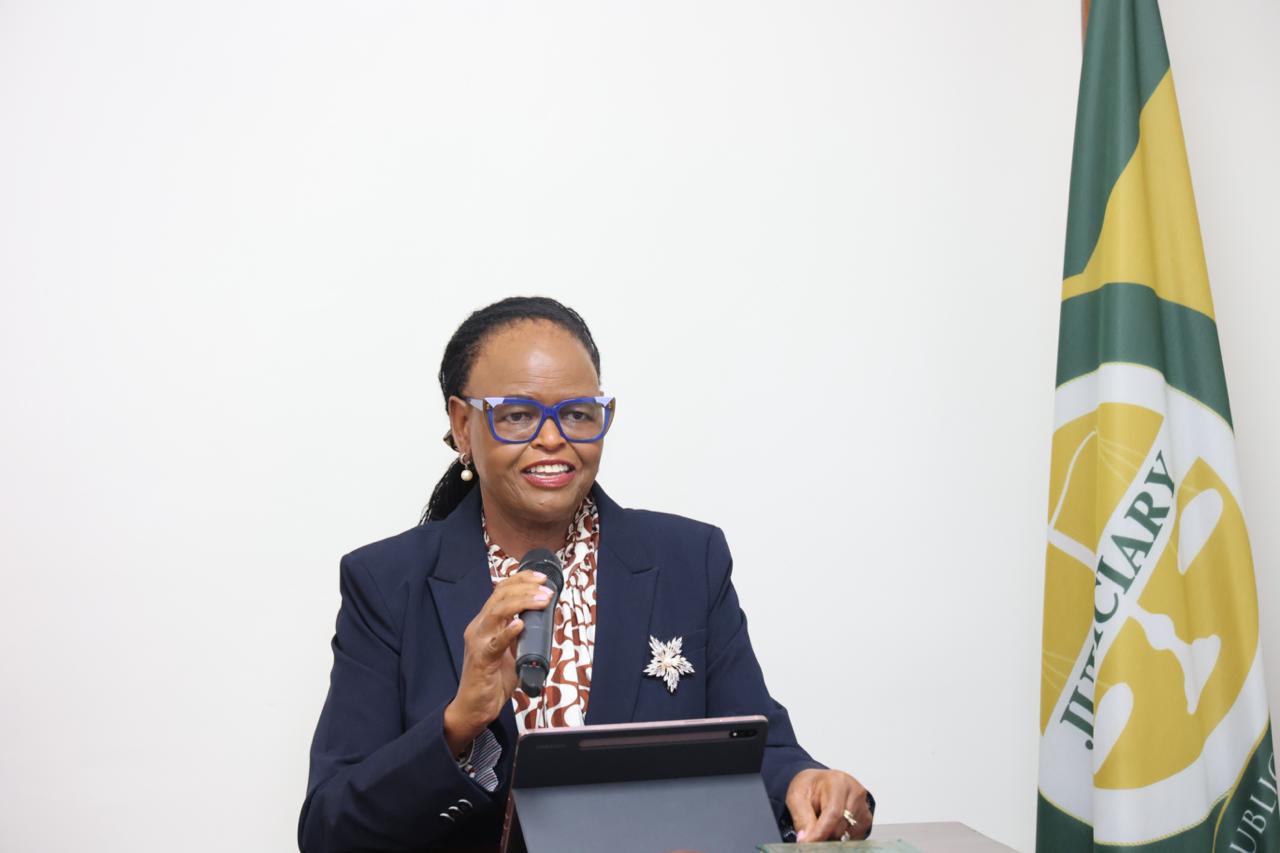
The Judiciary has appointed four magistrates’ courts to exclusively hear and manage cases related to narcotics trafficking and associated offences, aiming to strengthen Kenya’s legal response to drug-related crimes.
In a gazette notice dated January 16,2026 Chief Justice Martha Koome designated the JKIA, Kahawa, Mombasa, and Busia Magistrates’ Courts as Special Magistrates’ Courts for this purpose. The move is intended to speed up prosecutions, improve coordination with law enforcement agencies, and ensure more consistent handling of drug-related cases.
This initiative aligns with the government’s intensified efforts to combat drug trafficking, substance abuse, and the security risks connected to the illicit trade. It follows a high-level meeting convened by President William Ruto on January 7, focusing on scaling up the State’s response to alcohol and drug abuse nationwide.
The meeting, held in line with priorities outlined in the President’s New Year Address, emphasized fast-tracking legal, institutional, and operational interventions, with particular attention on prevention, enforcement, and rehabilitation measures.
During the discussions, President Ruto called for the finalization of the legal framework within 10 days to improve accountability, coordination, and enforcement among government agencies involved in tackling drug-related crimes.
The session brought together senior security and policy officials, including Interior Cabinet Secretary Kipchumba Murkomen, Interior Principal Secretary Raymond Omollo, Inspector-General of Police Douglas Kanja, Deputy Inspectors-General Eliud Lang’at and Gilbert Masengeli, Director of Criminal Investigations Mohammed Amin, NACADA Chairman Stephen Nairobi, NACADA Chief Executive Officer Anthony Omerikwa, and Kenya Bureau of Standards Managing Director Esther Ngari.
As part of the enforcement strategy, the Inspector-General confirmed that officers have been identified for deployment to the Anti-Narcotics Unit, with resources already allocated for their training. Additional operational support, including vehicles, equipment, and logistics, has also been provided to ensure readiness for nationwide operations.
In a landmark directive, President Ruto ordered the establishment of rehabilitation centres in all 47 counties, coordinated by NACADA in partnership with county governments. The directive further requires national referral hospitals to set up facilities that provide specialised treatment, counselling, and recovery services for individuals struggling with substance abuse.
This judicial and operational overhaul represents a major step in Kenya’s efforts to curb the societal and security impacts of drug trafficking and substance abuse, reflecting a more integrated and proactive approach by both the courts and enforcement agencies.































Comments
Sign in with Google to comment, reply, and like comments.
Continue with Google